Digital Waitlist Systems vs Physical Pagers: Full Comparison 2026
The End of the Buzzing Coaster
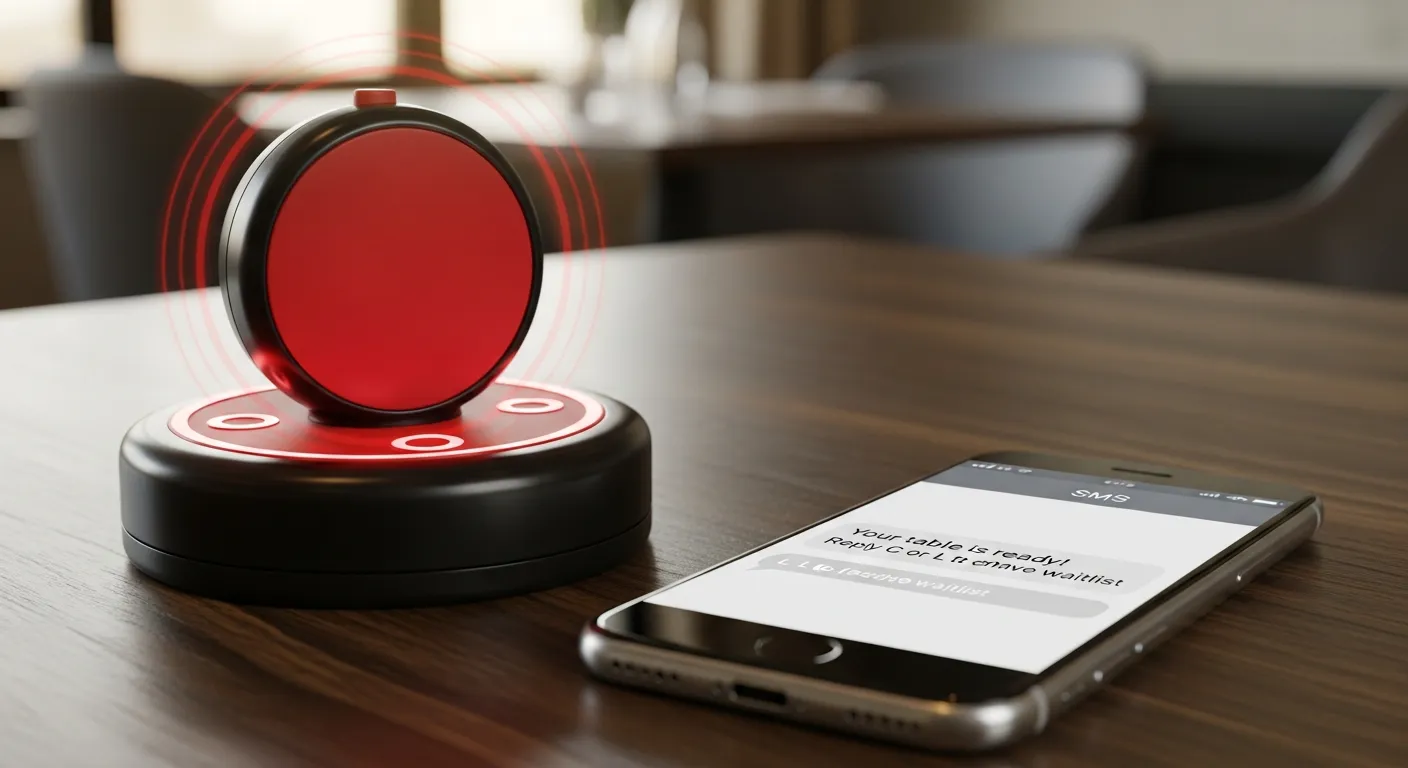
Physical pager systems — those vibrating, light-up coasters you've been handed at restaurants since the 1990s — are rapidly being replaced by SMS-based digital waitlists. In 2020, 78% of restaurants with waitlists used physical pagers. By 2026, that number has dropped to 31%. The remaining holdouts are mostly high-volume chains with existing hardware investments.
The shift isn't just about technology preference. Digital waitlists solve fundamental problems that physical pagers can't: limited range, no data collection, no communication channel, lost/stolen/broken hardware costs, and zero guest flexibility.
Cost Comparison
Physical pager system: $1,500-$3,000 initial hardware purchase for 20-30 pagers, $200-$500/year in replacement pagers (lost, broken, stolen — expect to replace 15-20% annually), $0/month ongoing software cost. 3-year TCO: $2,100-$4,500.
Digital waitlist (POS-integrated): $0 additional cost if included with your POS (KwickOS, Toast). $0 hardware — guests use their own phones. SMS costs: typically included or $0.01-$0.03 per message. 3-year TCO: $0-$200.
Digital waitlist (standalone): $50-$200/month subscription ($1,800-$7,200 over 3 years). $0 hardware. SMS included. 3-year TCO: $1,800-$7,200.
The cost advantage of digital is clear at the low end (POS-integrated = essentially free) but narrows with premium standalone solutions. The real value is in the capabilities digital provides that pagers physically cannot.
Range and Flexibility
Physical pagers have a range of 500-1,000 feet from the transmitter. This means guests must stay within the restaurant's immediate vicinity — the parking lot, the adjacent sidewalk. They can't browse the shops next door, wait in their car across a busy street, or grab coffee down the block.
SMS-based waitlists have unlimited range. A guest can add themselves from home, wait at a nearby store, sit in their car, or walk the neighborhood. This flexibility dramatically changes the waiting experience — instead of hovering near the host stand, guests use their wait time productively.
Virtual waitlist (join from anywhere) is the next evolution: guests add themselves to the waitlist from Google Maps or your website before they even leave home. They arrive when their table is nearly ready, eliminating the in-person wait entirely. KwickOS supports virtual waitlist joining via a link on your Google Business profile.
Data and Analytics
Physical pagers collect zero data. You know how many pagers you handed out, but not: how long each guest actually waited, when they walked away, what their party size was, or whether they were a returning customer.
Digital waitlists capture everything: wait time by party size, day, and time slot. Walk-away rates (who left and at what point in the wait). Party size distribution. Peak demand curves. Return visit frequency of waitlisted guests. Guest phone numbers for future marketing.
This data transforms queue management from reactive to strategic. You discover that 4-tops walk away 40% more than 2-tops, so you adjust your table mix. You find that 7:30 PM has 3x the waitlist of 6:00 PM, so you offer early dining incentives to smooth demand. None of these insights are possible with physical pagers.
Guest Experience Comparison
Physical pagers: guests receive a pager, stand in or near the lobby, wait for it to buzz, return to the host stand. The experience is passive and anxiety-producing — 'did I miss it? Is it broken? Am I still in the queue?'
Digital waitlist: guests receive a text confirming their position and estimated wait. They get updates. They can leave and come back. They know exactly where they stand. The experience is transparent and empowering.
Survey data from restaurants that switched: 84% of guests prefer the SMS-based system, 11% have no preference, and 5% prefer physical pagers (typically older demographics uncomfortable with text messaging). For the 5% who prefer pagers, the host can manually manage their queue entry and call them by name — the same service they got before.
Ready to Upgrade Your Restaurant?
Use one documented host-stand workflow for pager assignment, ready alerts, table status, and pager return so the queue does not depend on memory during a rush.
Get a Free Demo →Become a KwickOS Reseller
Earn recurring revenue bringing KwickOS to restaurants in your area. Exclusive territories available.
Apply Now →