Wait Time Psychology: Why 10 Minutes Feels Like 30 (And How to Fix It)
Maister's 8 Principles of Waiting
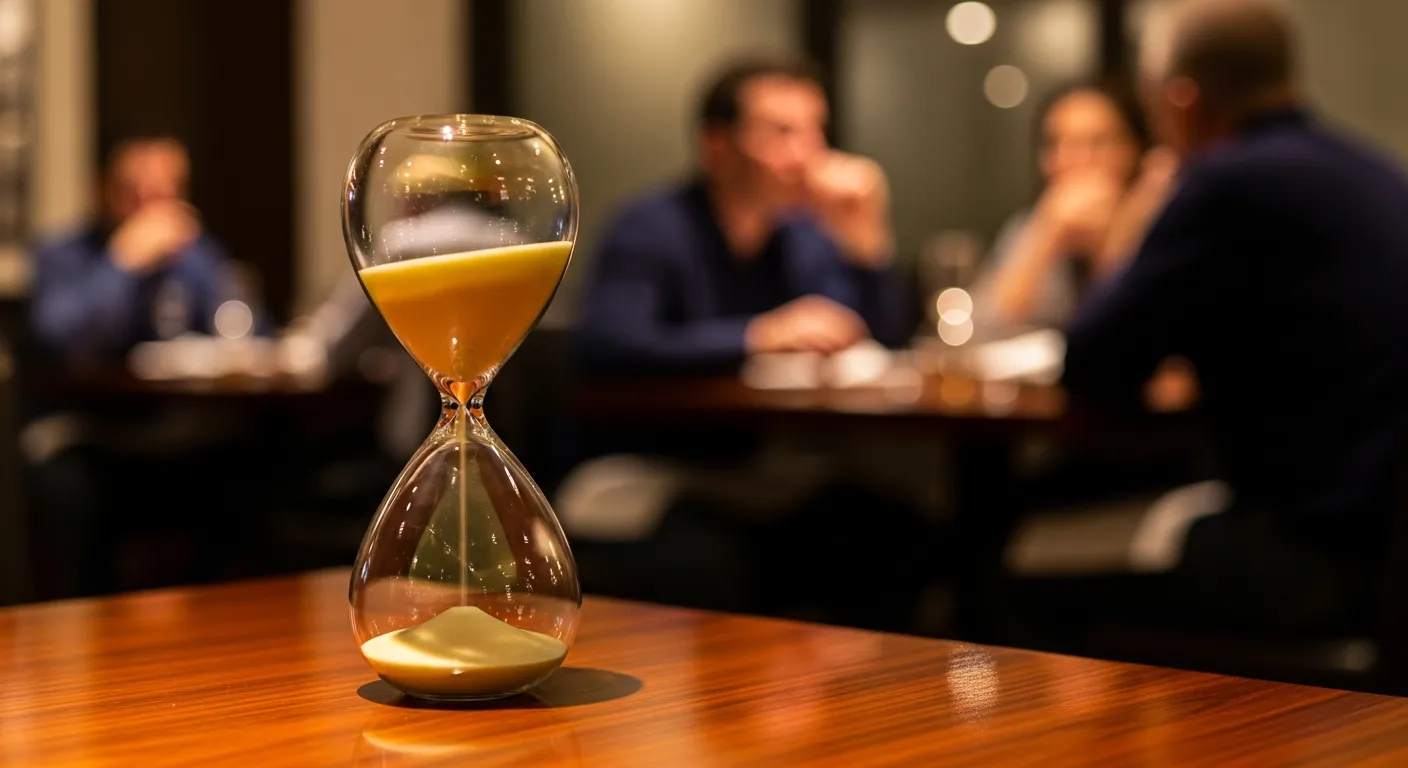
David Maister's seminal 1985 paper 'The Psychology of Waiting Lines' identified eight principles that govern how people experience waits. Three decades later, every principle still holds — and most restaurants violate all eight. Understanding these principles is the foundation of effective queue management.
The principles: (1) Unoccupied time feels longer than occupied time. (2) Pre-process waits feel longer than in-process waits. (3) Anxiety makes waits feel longer. (4) Uncertain waits feel longer than known waits. (5) Unexplained waits feel longer than explained waits. (6) Unfair waits feel longer than fair waits. (7) Solo waits feel longer than group waits. (8) The more valuable the service, the longer people will wait.
A restaurant that addresses even three or four of these principles — providing accurate time estimates (#4), giving waiting guests something to do (#1), and making the queue visibly fair (#6) — can make a 20-minute wait feel like 10. A restaurant that ignores all eight makes a 10-minute wait feel like 30.
Occupied vs Unoccupied Time
The most actionable principle: give waiting guests something to do. A menu to browse, a drink from the bar, a game on a tablet for kids, or simply a comfortable seat with good people-watching. Research shows occupied waits are perceived as 36% shorter than unoccupied waits of the same actual duration.
Digital waitlists amplify this principle: by texting guests when their table is ready, you free them to occupy their wait however they choose — browsing nearby shops, sitting in their car listening to music, or having a drink at the bar. The wait becomes their time, not dead time.
Simple, inexpensive tactics: display the menu on a screen or via QR code in the waiting area. If you have a bar, offer a 'waiting guest' drink special. Provide Wi-Fi with a branded login page. For family restaurants, a small activity station for children (coloring sheets, simple games) dramatically reduces perceived wait for parents.

Known vs Unknown Waits
An unknown wait of 15 minutes feels longer than a known wait of 25 minutes. This seems counterintuitive, but it's been demonstrated repeatedly in controlled studies. The psychological mechanism is anxiety: when you don't know how long you'll wait, your brain assumes the worst and allocates excessive attention to monitoring the wait.
Digital waitlist systems solve this by providing real-time position and estimated time. 'You are 4th in line, approximately 18 minutes' is dramatically more comfortable than 'it'll be a while.' Even when the estimate is imperfect, having a number anchors expectations and reduces anxiety.
Update the estimate if it changes. Telling a guest 20 minutes and then not updating them until minute 35 is worse than telling them 30 minutes upfront. Proactive communication — 'Running a bit behind, now about 25 minutes' — maintains trust even when the news isn't great.
Perceived Fairness and Queue Anger
Nothing generates queue rage faster than perceived unfairness. A party that arrived after you getting seated first — even for a legitimate reason (they're a 2-top and a 2-top just opened) — triggers visceral frustration. Without explanation, guests assume favoritism or incompetence.
Digital waitlists with visible queue position help, but they're not enough. When a smaller party is seated ahead of a larger one, proactive explanation is essential: 'The Smith party was seated ahead of you because a 2-person table opened up, but your 6-person table is being prepared now.' This transforms an unfair moment into a fair one with a simple sentence.
First-come-first-served is the default fairness expectation. If your system seats by table availability rather than strict order (which is operationally necessary), make this policy clear at join time: 'We seat by table size match — smaller parties may be seated before larger ones if a matching table opens first.' Setting expectations prevents perceived unfairness.
Practical Strategies That Work
Strategy 1 — The pre-process shift: Hand guests a menu and ask for drink orders while they wait. This shifts the wait from 'pre-process' (waiting for service to begin) to 'in-process' (actively participating in the dining experience). Research shows in-process waits feel 40% shorter.
Strategy 2 — The progress indicator: A text message saying 'You are now 2nd in line' at the halfway point makes the remaining wait feel faster because guests see progress. It's the same psychology as a loading bar on a screen — even if it doesn't change the actual speed, visible progress reduces impatience.
Strategy 3 — The pleasant surprise: Slightly overestimate your wait times. If you quote 25 minutes and seat at 20, the guest feels lucky. If you quote 15 and seat at 20, the guest feels cheated — even though the actual wait was the same. The 'underpromise, overdeliver' approach works consistently and costs nothing.
Ready to Upgrade Your Restaurant?
Use one documented host-stand workflow for pager assignment, ready alerts, table status, and pager return so the queue does not depend on memory during a rush.
Get a Free Demo →Become a KwickOS Reseller
Earn recurring revenue bringing KwickOS to restaurants in your area. Exclusive territories available.
Apply Now →