Restaurant Pagers, SMS, and AI Hosts: Where Each Channel Wins in 2026
Physical restaurant pagers are not obsolete in 2026. They are one channel in a host-stand stack that also includes SMS alerts, waitlist screens, reservations, pickup notifications, and phone automation. The important decision is not which channel sounds newest. It is which channel solves the specific guest-flow problem in your building.
Where Physical Pagers Still Win
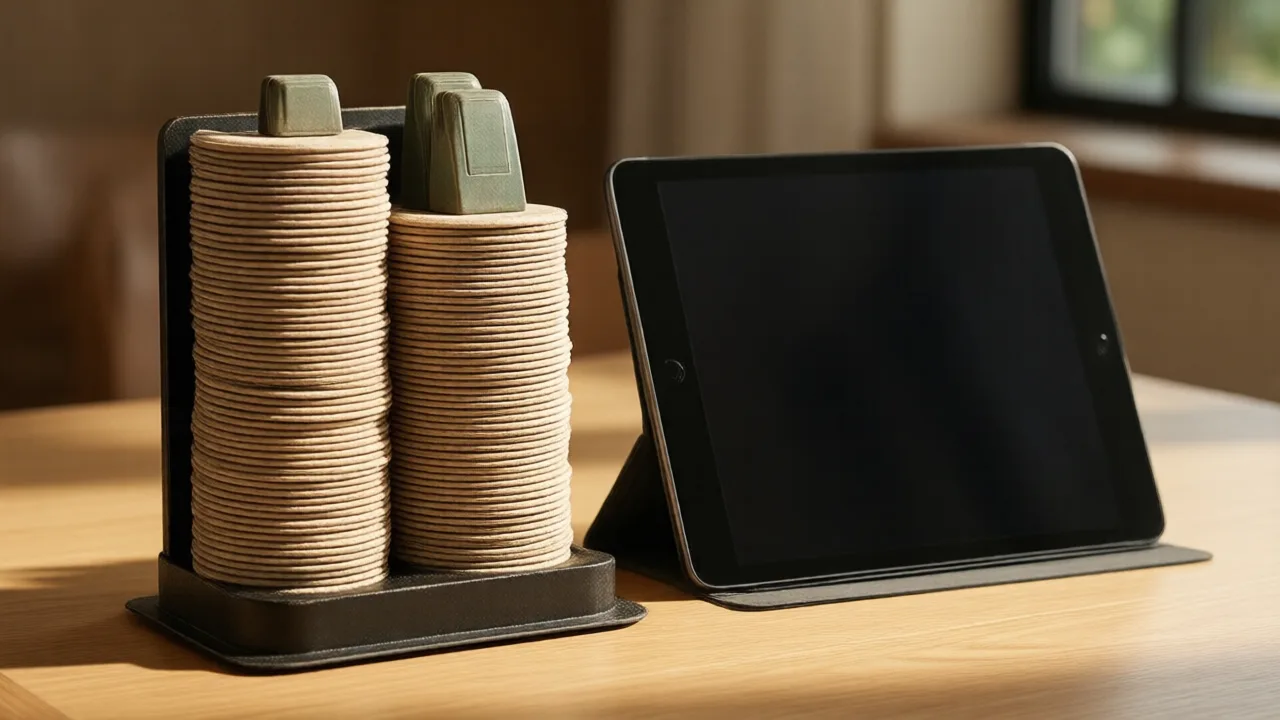
Coaster pagers still work well when the restaurant needs a controlled object that returns to the host stand. Guests do not need to share a phone number, download anything, read a text message, or keep cell service. The pager can vibrate, flash, or beep in a noisy lobby where a phone notification might be missed.
This matters in large dining rooms, food courts, casino properties, mall restaurants, family restaurants, tourist areas, and venues with weak cell coverage. A physical pager also gives the host a visible inventory: units assigned, units out, units returned, units charging, and units missing. SMS can be convenient, but it does not tell you whether the guest is still nearby or whether the notification was ignored.
Where SMS Alerts Win
Text messaging is strongest when guests should be free to leave the immediate waiting area. Outdoor districts, shopping centers, downtown restaurants, and long waits benefit from SMS because guests can browse, sit in a car, or walk nearby without holding a device. It also supports two-way replies such as "running late" or "we are here."
The weakness is dependency. SMS needs a correct number, guest consent, cell signal, and a guest who notices the message. It can also create privacy concerns for visitors who do not want to share contact information for a short wait. For those guests, a physical pager remains simpler.
Where AI Phone Hosts Fit
AI phone hosts solve a different bottleneck: incoming calls. They can answer hours, directions, basic wait-time questions, and sometimes add a caller to a waitlist. That helps the person at the door stay focused on guests in front of them. It does not replace the physical ready-alert workflow once the guest arrives.
A strong front-of-house setup can use all three channels without confusion. The phone system handles remote callers. The waitlist records parties and quotes. SMS handles guests who want distance. Physical pagers handle guests who do not want to share a phone number, have poor coverage, or need a simple object that lights and buzzes when the table is ready.
The Hardware Checklist
- Test pager range from the real transmitter location, not from an empty dining room.
- Walk the lobby, bar, patio, restroom hallway, pickup counter, and exterior waiting zones.
- Label every pager and charger slot so missing units can be identified at close.
- Train hosts to collect the pager before seating the party, not after menus are dropped.
- Keep a cleaning routine beside the charger so returned units are wiped before reissue.
- Track dead batteries separately from lost units so warranty and replacement decisions stay accurate.
Do Not Let Channels Blur
The common failure is mixing channels without rules. A guest gets a pager and a text. Another gets only SMS. A third is verbally quoted and never entered. During a rush, the host cannot tell who is waiting, who was paged, who confirmed, or which pager is still out. The system becomes noise.
Document one rule set. Use physical pagers for short-to-medium waits near the property, SMS for longer roaming waits, and phone automation for callers who have not arrived. Then audit the hardware workflow at the end of each shift: count units, clean units, charge units, record failures, and update the next day's spare count.
How to Assign the Channel at the Host Stand
A practical rule is to decide the channel when the party is added, not later when the lobby is already busy. If the guest plans to stay near the host stand, hand out a pager and write the pager number next to the party record. If the guest wants to shop nearby or wait in a car, use SMS and confirm the phone number before they leave. If the guest is still on the phone and has not reached the property, the AI host or call handler should collect only the information needed for a clean arrival handoff.
The host screen should make that choice visible. Staff need to know whether a ready table triggers a physical page, a text message, a phone callback, or a manager walk. The wrong channel creates avoidable delays: a guest with a pager receives a text they never read, a guest waiting outside misses a vibration-only device, or a caller believes they are in line but no arrived-party workflow exists.
Restaurants that combine channels should also separate closeout reports. Count pager failures separately from SMS no-shows and phone automation errors. That gives management useful evidence: whether the problem is hardware range, guest contact data, staff procedure, or a remote-call script.
Use the right channel for the right wait
Physical pagers are still valuable when range, privacy, and return control matter. Start by mapping your building and host workflow before adding another notification channel.